
The New Mexico Court System
The trial side of the New Mexico court system starts with District Courts. They are the courts of general jurisdiction. Felony trials, major civil matters, domestic relations, juvenile cases, and contested estates all land there. Limited and local work falls elsewhere. Magistrate Courts, Bernalillo County Metropolitan Court, Municipal Courts, and Probate Courts handle it. Above them, the New Mexico Court of Appeals hears most appeals from District Courts. The New Mexico Supreme Court sits as the court of last resort. It takes certain mandatory and discretionary matters.
The Judiciary lists 13 judicial districts. It counts 34 District Courts, 43 Magistrate Courts, 78 Municipal Courts, and 33 Probate Courts. Those counts describe different kinds of court units. They can shift over time. Every trial-level court has its own clerk for the case file. An appeal carries a separate clerk and docket alongside the originating case. The Supreme Court of New Mexico's official court resources show the high-court layer of the appellate system.
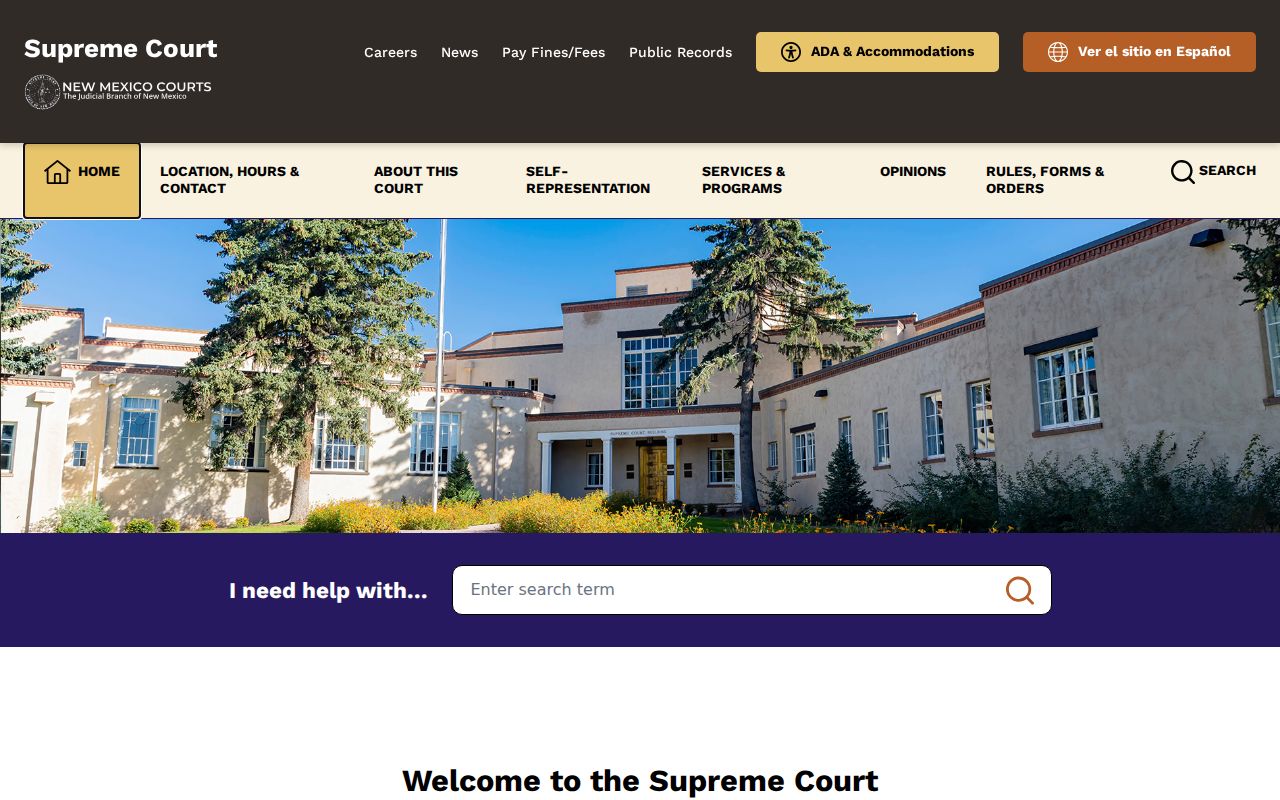
On a lower-court appeal, two records tell the story. The trial register may show the notice, while the appellate clerk tracks the later filings and the decision.
New Mexico Courts: AOC and JID
Two central offices support the courts without holding case files. The Administrative Office of the Courts runs statewide judicial administration, reporting, and services. The Judicial Information Division (JID) handles automation and technology support. Their shared case-management and public-access tools depend on this work. Still, neither office keeps an individual case file for a caller.
The Administrative Office of the Courts and the Judicial Information Division describe these separate roles in administration and technology. For a docket entry, a filed document, or a certification, contact the clerk. That clerk sits at the court holding the case.
The Statewide Case Search Portal
The public's statewide entry point is New Mexico Case Lookup. It covers appellate, District, Magistrate, Bernalillo Metro, and Municipal court information. The Judiciary describes limits on that coverage. It does not give the public every filed document. Nor does it replace the court's official register. For the visible fields and practical search steps, see the New Mexico case search page.
| Portal Feature | What It Covers | Where It Falls Short |
|---|---|---|
| Public case index | Case information across several state court levels, without registration. | Municipal results are narrow; protected matters and older files may not appear. |
| Register detail | Some case header and history information is visible. | The county or court clerk remains the source for the full official register. |
| Filed documents | No general document-image access through public Case Lookup. | Ask the clerk or use a registered access tier when eligible. |
| Update timing | Data appears through Judiciary case systems. | A universal public refresh schedule was not confirmed. |
A case appearing in the statewide index says nothing about its documents. They may be open, sealed, redacted, or restricted to a user profile. A statewide result can orient a records request, but the assigned court confirms whether a specific document is available.
New Mexico Court Access Has Separate Tiers
Access comes in three separate products. They are public Case Lookup, registered re:SearchNM, and Secured Odyssey Public Access (SOPA). re:SearchNM presents Odyssey case information and documents to eligible accounts under access profiles. What a user sees depends on the tier and the case's restrictions. An open index is not the same as registered document access. The registered re:SearchNM entry is the account-based route.
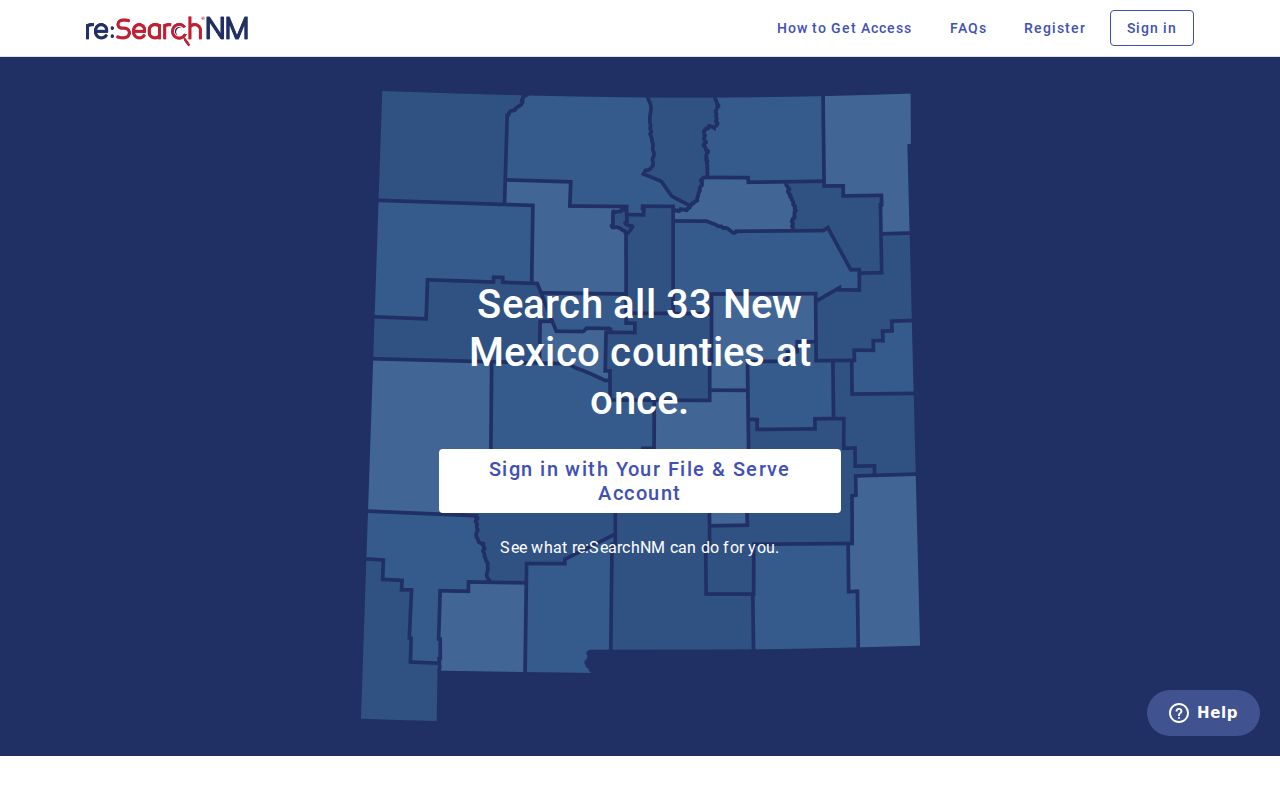
The Judiciary announced that active SOPA accounts moved to re:SearchNM in April 2023. Current help material still describes SOPA as available while system issues are addressed. The Secured Odyssey Public Access page remains a separately maintained login channel.
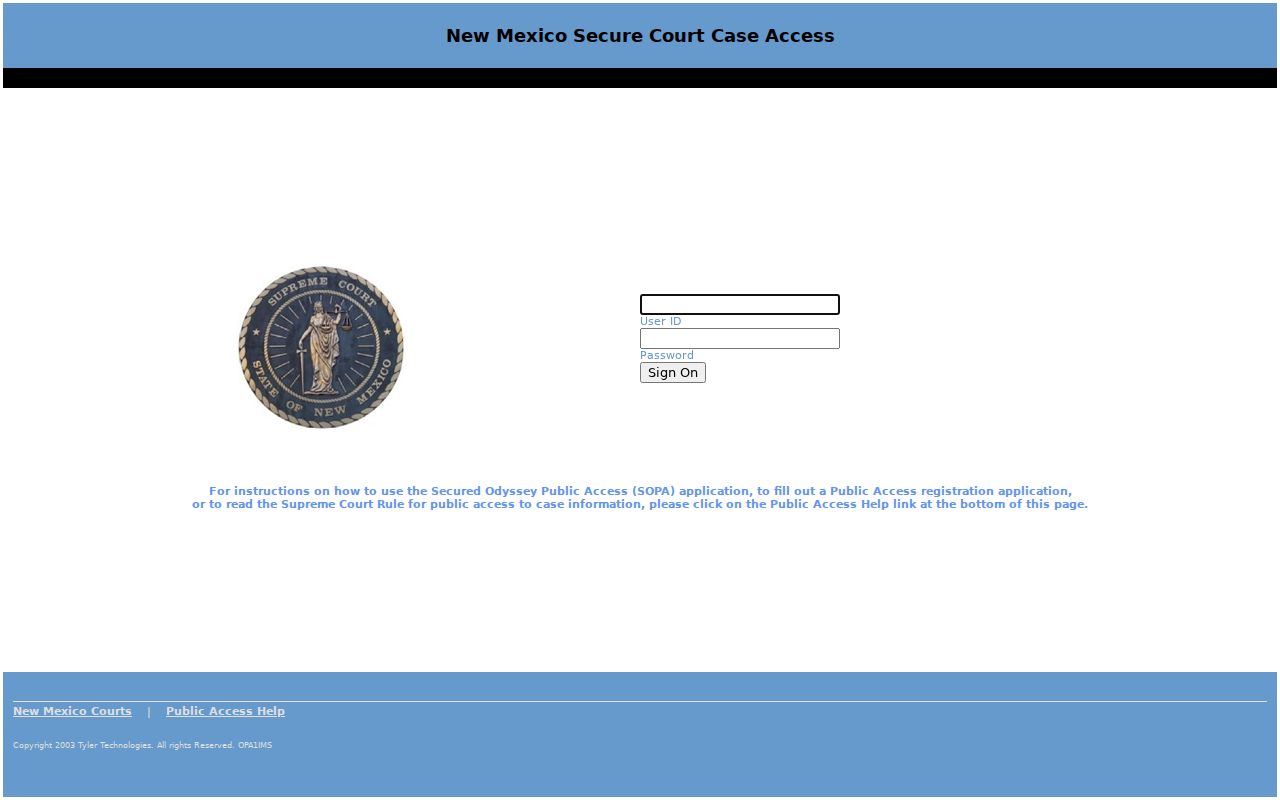
That migration history does not prove SOPA is fully retired. Follow the current Judiciary help instructions for account and access questions.
How Dockets Flow From County to State
Every case opens in the court with jurisdiction. That court's clerk maintains the register and file. When an attorney submits a covered document electronically, the court must accept and process it first. Only then does the filing become part of the case record. Case data may then surface in public or registered access products under the case-access policy. Keep the steps distinct. E-filing is submission, the clerk's register is the court record, and Case Lookup is a public index.
Docket flow: Court filing › assigned clerk and case system › court register › New Mexico Case Lookup (where public access applies)
Not every initial filing goes through eFile & Serve, and not every record or image shows up in Case Lookup. Local courts can also publish calendars and forms that the statewide portal does not duplicate. The county directory routes to the right local court site, but the court named in the case remains the records custodian.
Thirteen New Mexico Judicial Districts
New Mexico's 13 judicial districts group all 33 counties into regional administration. Districts are not the same as county lines or the number of District Court locations. One District Court office may serve several counties. The statewide court finder lists the assignments. The First District, for example, serves Santa Fe, Los Alamos, and Rio Arriba Counties. The Fourth serves Guadalupe, Mora, and San Miguel Counties.
The official courts-by-district directory shows current county assignments. Match the county name and court location on a filing. That way you don't land on a similarly named clerk or the wrong level of court.
Note: A district office can serve multiple counties. Match the district and court location listed for the case.
New Mexico Courts eFile & Serve and E-Filing
New Mexico attorneys file and serve papers through New Mexico Courts eFile & Serve. It is a Tyler Technologies portal. It is a filing channel. It is not a public docket search. Civil e-filing is mandatory in the Supreme Court, the Court of Appeals, the District Courts, the Magistrate Courts, and the Bernalillo County Metropolitan Court, with rule-based coverage and exceptions. The statewide summary leaves Municipal Court filing out of that list. The eFile & Serve entry point shows the submission screen covered filers use.
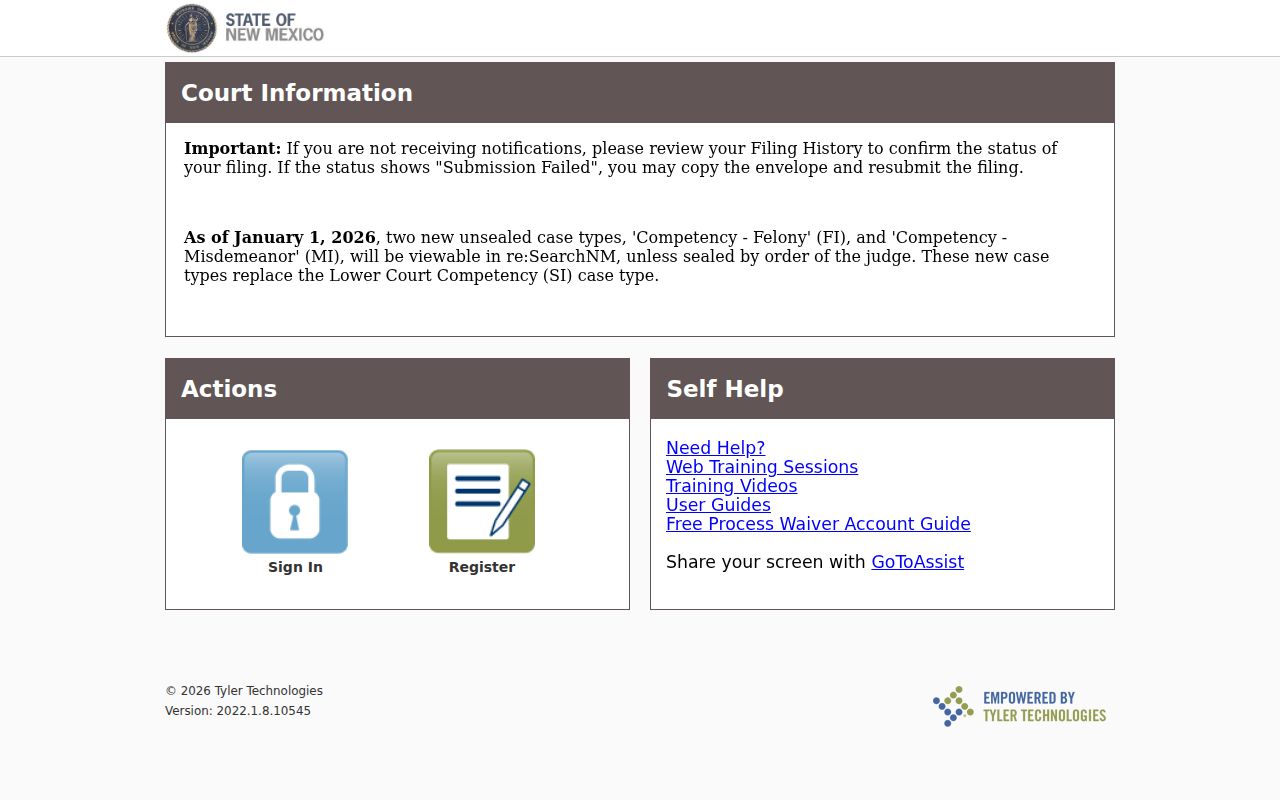
An upload receipt is not acceptance. It does not prove the clerk took the filing, and it does not put the case in a public docket yet. The Judiciary's attorney e-filing overview spells out mandatory coverage and the fee categories.
The overview sets convenience fees for non-appellate civil e-filing at $12 for File & Serve, $8 for File Only, and $0 for Serve Only. The Supreme Court and Court of Appeals sit outside those fees. Criminal subsequent e-filing is free under the cited guidance. Keep these charges separate from clerk copy fees.
New Mexico Courts from Odyssey to E-Filing
The shared case-management backbone grew over several years. Those milestones are not launch dates for the public Case Lookup website. E-filing changed how covered documents reach the court, but clerk review, the case register, and public-access rules still decide what becomes visible.
| Milestone | System Change | What It Means for a Search |
|---|---|---|
| November 2008 to 2012 | Odyssey implementation began and trial-court conversion was completed. | Shared case management did not make every document public online. |
| October 1, 2019 | District Court criminal subsequent filings became available electronically. | This concerns later filings in existing cases. |
| April 7, 2023 | Active SOPA accounts were migrated to re:SearchNM. | Current help still mentions SOPA during issue resolution. |
| October 14, 2024 | Criminal subsequent e-filing became mandatory in Magistrate Courts and Bernalillo Metro. | The filing channel is separate from public Case Lookup. |
New Mexico's technology history is a string of court-management and filing changes, not one statewide "docket launch." An accepted filing can still be sealed, redacted, or kept out of a public view under the applicable access rule.
Statewide Portal vs County Docket
Case Lookup can help you spot a case across covered court types. The real case register lives with the District Court Clerk or the lower-court clerk. The file sits there too. Certified copies come from the court that holds the document. Start with the county directory to find the local court site. Then follow the case number and the court named on the filing.
| Feature | Statewide Portal | County Docket |
|---|---|---|
| Purpose | Search case information across listed state court types. | Maintain the official file for a case assigned to that court. |
| Register | Public case detail may show some recorded activity. | Clerk answers questions about the complete register and filed notices. |
| Documents | Public Case Lookup does not provide general filed-document images. | Request inspection or copies under the court's access process. |
| Certified copy | Not issued by the statewide index. | Request from the clerk for the court holding the record. |
Note: The public index, the official register, and a copy of a filed document are separate pieces of the court-record access path.
Why New Mexico Case Lookup Can Miss Cases
Public Case Lookup has known limits. A missing result does not mean a county stands outside the court system. The Judiciary describes municipal results as specified historical domestic-violence and DWI records. Juvenile criminal cases and Family Violence Protection Act protection-order entries are excluded. Files from before 1997 take a separate request route. A court can also restrict a case by rule or order.
When a search comes back empty, check the spelling, location, category, and filing year. Then ask the originating clerk about the proper route. A court calendar may answer a different question than the public statewide index. So may a local request form or an authorized re:SearchNM tier. The county directory gives you the local handoff. But it does not promise that every record is online.
Court Technology and History
New Mexico's technology milestones run from Judicial Information Division automation work dating to 1994. The Odyssey rollout began in 2008, and trial-court conversion was completed in 2012. The Court of Appeals' older FACTS application was later scheduled for closure. Its case management aligned with Odyssey. These dates mark the case-management backbone. They are not public portal launch dates.
Electronic filing and registered document access did not erase archived material or public-access limits. An older file may take a separate request and clerk retrieval. A public result may show a docket header without its document image. Access still turns on the official record and the rules in force for that case.
FY25 New Mexico Court Measures
Annual statistics measure caseload in the aggregate. They say nothing about the progress of one docket. FY25 Magistrate Courts reported 154,664 incoming and 159,727 outgoing matters, a 103.3 percent clearance rate. District Court active-pending inventory stood at 47,687 civil and 14,142 criminal cases, with reported time to disposition of 237 days civil and 197 days criminal. Each measure uses its own definitions. Do not merge them into one statewide total. New Mexico Judiciary reports and statistical addenda give the period and definitions behind the published measures.
In the addendum, incoming counts new, reopened, and reactivated cases. Outgoing counts closed and inactivated matters. A rate above 100 percent means outflow beat inflow for that period. It does not mean no cases remain pending. A one-year flow measure describes work counted in that window. It does not describe the status or expected timeline of a specific case.